

News
Power Distribution Selection for Semiconductor Cleanrooms: Why epoxy resin fluidized insulation busbars are more suitable for precision manufacturing applications
Reading volume:88 Release time:2026-08-07 17:11:34
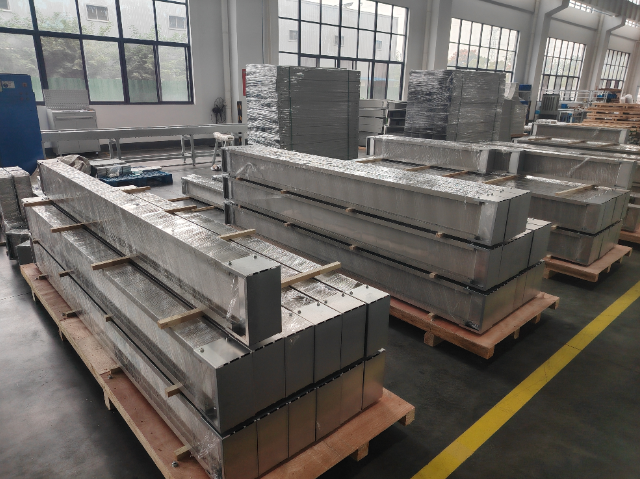
In precision manufacturing scenarios such as semiconductor and high end electronics production, selecting power distribution systems for clean rooms involves far more than merely meeting current carrying capacity requirements. As plant wide power transmission carriers, Busway trunking’s structural features, material stability and maintenance frequency directly determine clean room classification, production yield and operational reliability. Poorly matched power distribution equipment can become hidden pollution sources within clean environments and even trigger unplanned shutdowns, resulting in substantial production capacity losses.
Based on the operating condition characteristics and industrial standard requirements of semiconductor clean rooms, this article addresses real world application pain points, objectively analyzes core requirements for power distribution equipment in clean room environments, and explains the applicability of epoxy fluidized bed insulated Busways, offering references for power distribution selection in precision manufacturing projects.
Four Core Requirements: Special Thresholds for Clean Room Power Distribution
Unlike ordinary industrial workshops, semiconductor clean rooms impose power distribution equipment requirements centered on “preserving clean room environment and ensuring non stop production”, each representing non negotiable demands for precision manufacturing:
Low dust & Low volatility: Eliminate Clean Room Pollution Sources
Clean rooms enforce strict limits on particulate matter concentration and VOC emissions, with higher grade rooms demanding stricter controls. Power distribution equipment featuring dust accumulating structural gaps, small molecule emissions from aged insulation materials, or volatile sealing components will continuously release contaminants, directly harming product yields in wafer processing and chip packaging processes.
Long term Stable Insulation Performance to Reduce Shutdown Risks
Semiconductor production lines run 24/7. A single power distribution failure induced shutdown often causes production capacity losses in millions. Therefore, Busway insulation systems must maintain stable performance over long term operation, resist ambient temperature humidity fluctuations, and fundamentally prevent failures such as insulation breakdown, short circuits and creepage.
Low maintenance & Minimum Disturbance: Limit Clean Room Access
Every cover opening inspection or equipment maintenance inside clean rooms requires dedicated clean protection procedures, raising maintenance costs and risking external contamination and production schedule disruptions. Power distribution equipment requiring frequent disassembly for inspection will continuously destabilize clean room conditions.
High load Capacity & Low Temperature Rise for Precision equipment Power Supply
Semiconductor production equipment features high power density and stable continuous loads, imposing strict requirements on Busway current carrying capacity and temperature rise control. Excessive temperature rise accelerates insulation aging, dissipates extra heat into surroundings, and increases cooling loads and energy consumption for clean room air conditioning systems.
Adaptation Shortcomings of Conventional Busways in Clean room Applications
Air type Busways and conventionally coated Busways, widely used in general industry settings, exhibit inherent structural limitations inside clean rooms — not due to insufficient basic performance, but poor native adaptability to clean room operating conditions:
Dust prone structural gaps: Spliced housings, plug in gaps and ventilation openings easily trap dust, forming hidden dust sources that are difficult to clean.
Aging prone volatile insulation materials: Some conventional insulation materials degrade and produce precipitates under long term heat, releasing trace particulates and volatile substances and failing long term high grade clean room requirements.
Frequent maintenance interventions: Periodic cover opening is required to check bolt torque, remove internal dust and verify insulation status; repeated opening operations create heavy disturbances to clean room environments.
Limited ingress protection rating: Conventional Busways cannot fully adapt to clean room positive pressure, temperature humidity controlled environments; condensation and dust ingress accelerate insulation performance degradation.
Epoxy Fluidized bed insulated Busways: Fundamentally Optimized for Clean room Environments
Adopting an integral molding process, epoxy fluidized bed insulated Busways form a tight, gap free and fully covered bond between insulation layer and conductors. Purpose built for high demanding applications, their properties match core clean room requirements perfectly:
Integrated Dense Structure: Source Control for Dust and Volatiles
With precisely controlled temperature and flow velocity, the fluidized bed insulation process coats conductors uniformly with epoxy resin to form a continuous, dense, gap free insulation layer without spliced cavities or ventilation openings.
Smooth surfaces resist dust accumulation and allow easy cleaning, preventing the busway itself from becoming a dust source.
Epoxy resin delivers stable material performance with low volatilization and negligible precipitation during long term service. It releases no contaminants and satisfies environmental control standards for high grade clean rooms.
Long term Insulation Stability for Uninterrupted Production Reliability
The monolithic insulation fully isolates conductors from ambient surroundings, achieving far superior moisture proof, dust proof and anti corrosion performance compared with conventional structures:
Insulation resistance remains stable regardless of clean room temperature humidity swings and positive pressure airflow, effectively avoiding creepage and breakdown risks.
With H class temperature resistance (180 °C), insulation performance degrades minimally even under continuous full load operation, supporting long run production lines and greatly lowering unplanned shutdown probability.
Maintenance free Design to Minimize Environmental Disturbance
Thanks to its integral sealed construction, fluidized bed insulated Busways require no cover opening inspections during regular operation:
Routine maintenance consists only of external visual inspection and infrared temperature measurement; no housing disassembly is needed, greatly reducing personnel access and clean room disturbance.
Long service life brings much lower maintenance workload over the full lifecycle versus traditional Busways, cutting clean room O&M costs and shutdown risks.
Low impedance & Low Temperature Rise for Stable Precision load Power Supply
Conductors are manufactured from high purity oxygen free copper paired with uniform dense insulation layers, delivering even heat dissipation and low conductor impedance:
Higher current carrying capacity for equivalent cross section, stable operational temperature rise, well suited for sustained heavy load demands of semiconductor equipment.
Controlled self generated heat reduces thermal impact on clean room ambient temperature, indirectly lowering air conditioning energy consumption and supporting green clean factory objectives.
Mega: Specialized Insulation Technology Empowering Precision manufacturing Power Distribution
For years, Mega Optimus PRO has focused on R&D and application of epoxy fluidized bed insulation technology. Its core Busway products are widely deployed in high end manufacturing and precision electronics sectors, delivering full lifecycle power distribution solutions for semiconductor clean rooms:
Mature and stable manufacturing processes apply internal control standards stricter than national specifications for insulation layer uniformity and density, ensuring clean room suitability from the production stage.
Custom specification design is supported; product structure and protection configurations can be optimized according to on site routing, clean room classification and load characteristics.
Complete technical briefings, installation guidance and full lifecycle services are provided. Every phase from selection to commissioning complies with clean room construction specifications to support smooth project delivery.
Competitiveness in precision manufacturing lies within every detail. As concealed infrastructure, power distribution system application fit directly determines production stability and service life. Selecting products based on genuine clean room requirements and building a solid power foundation constitutes a key step toward long term reliable operation for semiconductor and high end electronics projects.
Should you require consultation on power distribution selection and solutions for semiconductor, precision electronics or clean room scenarios, please contact us via message. We will deliver professionally tailored solutions based on your project specific operating conditions.