

News
Power Distribution for Liquid-Cooled Data Centers: How to Select Busways Adapted to High-Humidity and High-Temperature Environments
Reading volume:0 Release time:2026-10-30 09:28:28
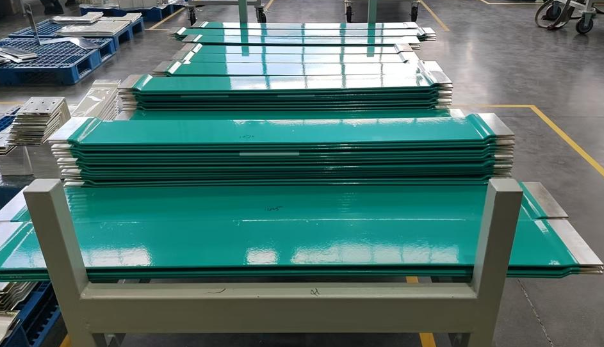
As AI computing power density continues to rise, liquid-cooled data centers account for an increasing share of the market. Compared with traditional air-cooled computer rooms, liquid-cooled environments feature drastically different temperature and humidity conditions, imposing harsher operating conditions on power distribution systems. As the core backbone for power transmission and distribution, the environmental adaptability of busways directly determines the long-term operational reliability and O&M costs of data centers. Improper selection may easily trigger latent faults such as insulation degradation, condensation discharge and connector overheating, posing risks to stable computing operation.
I. Core Operating Challenges for Power Distribution in Liquid-Cooled Environments
Liquid-cooled data centers remove heat from IT equipment via coolant, creating an overall environment distinctly different from traditional setups and bringing three major challenges to power distribution equipment: Elevated ambient humidity: Humidity around cold-plate and immersion liquid cooling systems is markedly higher than in air-cooled rooms. Local zones tend to reach high-humidity conditions. Long-term exposure of power distribution equipment to such environments raises the risk of dampened insulation; Obvious localized heat accumulation: Temperature differences between the inlet and return coolant of cabinets create uneven ambient temperature distribution. Busways routed close to heat sources will undergo long-term localized high temperatures, accelerating the aging of insulation materials; Condensation risk from temperature differences: Temperature gaps across different areas of the room and thermal fluctuations during equipment startup and shutdown tend to form condensation on the surface of busway enclosures and insulation layers. Condensation is especially prone to seep into gaps of conventional spliced structures.
II. Limitations of Traditional Cladded Busways for This Application
Standard air-type and ordinary cladded busways have inherent structural drawbacks when deployed in high-humidity and high-temperature liquid cooling environments: Vulnerability to moisture ingress through structural gaps: Conventional busways mostly adopt spliced enclosures and cladded insulation with seams and interfacial gaps. Moisture vapor easily penetrates and accumulates between insulation layers and conductors under high humidity, causing rapid drop of insulation resistance and even tracking or short-circuit faults; Air gaps accelerate insulation aging: Tiny air gaps exist between cladded insulation and conductors. Partial discharge readily occurs inside these gaps under high temperature and humidity. Long-term operation speeds up insulation aging and breakdown, greatly shortening equipment service life; Difficulties in maintenance inspection: Internal dampening and air-gap discharge are latent faults that are hard to detect during routine patrols. Problems are usually identified only after temperature rise alarms or insulation breakdown, leading to passive troubleshooting and wide-ranging impacts.
III. Core Criteria for Busway Selection for Liquid-Cooled Scenarios
In response to the operating characteristics of liquid cooling environments, busway selection shall focus on three core dimensions: insulation structure, temperature resistance and sealing performance, so as to improve environmental adaptability fundamentally through design: Prioritize monolithic insulation structure: Busways manufactured with epoxy fluidized insulation technology feature insulation layers tightly bonded to conductors via one-piece forming. Free of air gaps and interfacial seams, they structurally block moisture ingress and air-gap discharge. The dense insulation barrier effectively repels ambient moisture and maintains stable insulation performance over the long term even under high humidity, sharply reducing damp-related failure risks. Mega Technology’s epoxy fluidized insulated busway adopts this process, delivering continuous, uniform insulation without splice breaks and excellent overall sealing for long-term operation in high-humidity environments.
Sufficient temperature resistance margin matching the scenario: Liquid cooling environments have sharp local temperature fluctuations, so busways must carry adequate temperature rating margin. Products with Class H (180℃) temperature resistance are preferred. They sustain stable insulation performance under localized high heat and full-load operation, preventing accelerated insulation aging caused by excessive temperature.
Adopt maintenance-free design to reduce O&M workload: Busways with monolithic sealed structures do not require cover opening for internal moisture checks during normal operation. Only external infrared temperature measurement and visual inspection are needed. This greatly reduces the frequency of cover-opening work for maintenance teams and prevents moisture and dust from entering the unit during inspection.
IV. Front-End Selection Is Critical to Mitigate Power Distribution Risks in Liquid-Cooled Facilities
The power distribution reliability of a liquid-cooled data center is largely determined at the selection stage. Selecting busway structures tailored to site conditions, instead of directly adopting selection criteria designed for air-cooled rooms, fundamentally reduces the probability of insulation faults under high temperature and humidity, extends equipment service life and cuts the total life-cycle O&M expenditure.
Mega Technology provides customized insulated busway solutions for liquid-cooled data centers. We optimize product configurations according to routing layouts and ambient conditions of each project to support stable operation of computing infrastructure.