

News
Distribution Capacity Expansion for Existing Data Centers: How to Minimize Downtime Impact
Reading volume:0 Release time:2026-11-13 08:00:14
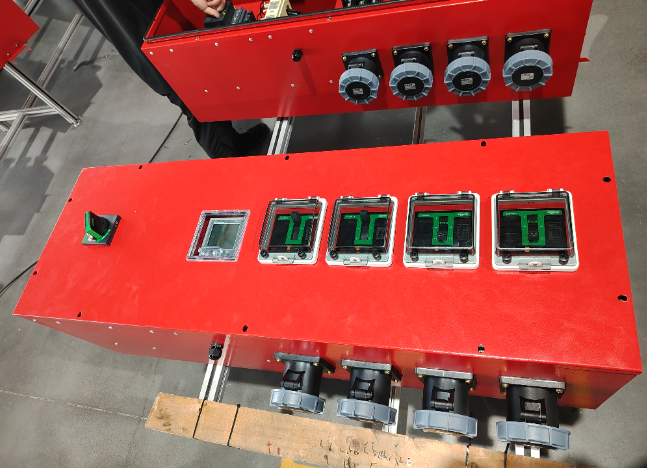
As AI computing power density increases and business scales expand, a large number of existing data centers are confronted with the demand for power distribution capacity upgrade. Compared with new-build projects, the core contradiction of existing computer room renovation lies in the urgent demand for capacity expansion paired with stringent business continuity requirements. Conventional power distribution renovation solutions usually require full-line power outage for construction. The business loss and compliance risk caused by a single shutdown far exceed the cost of equipment modification. How to complete busway expansion while minimizing the impact of outages has become a core issue for power distribution upgrades in existing data centers.
I.Three Typical Pain Points of Traditional Busway Expansion
The difficulty of power distribution renovation for existing computer rooms essentially stems from conflicts between live operating systems and renovation work. Traditional solutions generally have three shortcomings:
Full-line power outage with wide business impact: Traditional busway expansion requires disconnecting the upstream main power supply and involves power-cut work for the entire power supply chain. The impact covers all cabinets and business systems on the corresponding circuit. Shutdown duration is usually measured in days, causing direct losses to co-location services and self-owned computing services in operation.
Extensive on-site modification with poor quality controllability: Non-standard renovation requires on-site work including busway cutting, interface reworking and insulation repair. Construction environment and process precision are inferior to factory prefabrication. The original protective structure and insulation performance are easily damaged, bringing latent risks such as joint overheating and insulation degradation for later operation.
Poor compatibility between new and old systems: If the expanded sections and original busways come from different brands and adopt different process standards, interface tolerances, insulation classes and current-carrying characteristics can hardly be fully matched. Problems such as poor contact and inconsistent performance degradation are likely to occur. The responsibility boundary for subsequent operation and maintenance becomes ambiguous, making fault troubleshooting difficult.
II.Modular Plug-in Solution: A Feasible Path for Low-Disturbance Expansion
Plug-in busways with standardized and modular design can systematically reduce the impact of expansion renovation on live operating systems in terms of construction mode and product form. Its core advantages are reflected in three dimensions:
Factory-prefabricated standard modules with minimal on-site modification: All expanded busway sections and plug-in units are prefabricated and tested before delivery in the factory. Dimensional accuracy, insulation performance and structural strength comply with unified original manufacturer standards. Only section assembly and plug-in connection are required on site without large-scale cutting or reworking, which maximally retains original factory quality and avoids quality risks from on-site construction.
Segmented and zoned construction to narrow outage scope: Modular busways support circuit-based and sectional power-cut construction. During renovation, only the local power supply of the section to be expanded needs to be disconnected instead of shutting down the whole busway. Non-renovation sections can remain powered normally, minimizing the outage scope and greatly reducing impact on running services.
Unified original manufacturer standards for consistent performance after expansion: The expanded sections and original busways adopt the same process system, interface specifications and performance standards. Insulation class, current-carrying capacity and temperature rise characteristics are highly consistent. Compatibility risks caused by mixing multiple brands are completely avoided, ensuring overall system reliability and unified O&M after expansion.
III.Implementation Support from Mega Technology
Mega Technology’s epoxy resin fluidized insulated busway adopts full-series standardized modular design, equipped with full-range original plug-in units and connection components. Customized renovation solutions can be provided for expansion demands of existing data centers:
In the early stage, we can cooperate with site survey and formulate low-disturbance construction plans based on original busway specifications, routing paths and expansion goals to optimize the outage scope and construction cycle to the greatest extent;
All expansion components are prefabricated by the manufacturer and delivered only after passing factory inspection to guarantee compatibility and consistent performance with the original system;
Full-process technical guidance is available during construction to assist on-site connection and commissioning, ensuring stable commissioning of the renovated system.
The core of power distribution expansion for existing data centers is to strike an optimal balance between business continuity and capacity upgrade. Adopting the modular plug-in busway solution can effectively reduce outage impact, control renovation risks and ensure long-term operational reliability, making it a practical path for power distribution upgrades of existing computing facilities.