

News
Power Distribution for Semiconductor Cleanrooms: How to Meet High-End Fire Safety Regulatory Requirements of FM and UL
Reading volume:4 Release time:2026-11-20 08:43:02
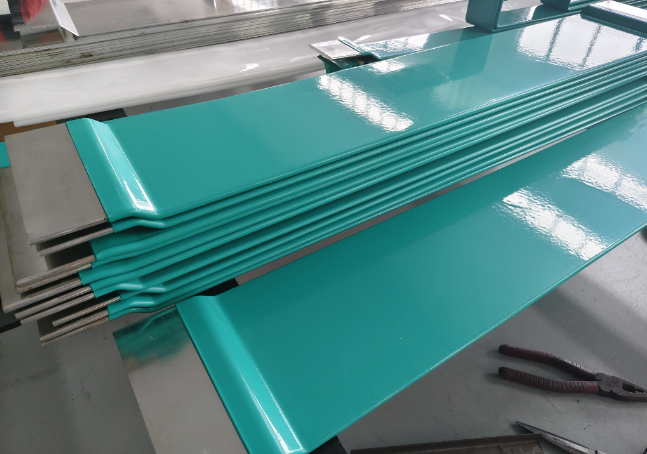
In the construction system of high-end semiconductor wafer fabrication facilities, FM Global risk management and UL safety certification are recognized high-tier access benchmarks. Cleanrooms feature high value density per unit area and stringent production continuity requirements. An electrical fire can not only damage equipment, but also trigger substantial indirect losses from production shutdowns and compromised cleanroom environments. As the primary power distribution backbone running throughout the facility, the fire safety performance of busways constitutes a core foundational element for projects to meet FM Global and UL control requirements.
Dual Control Logic of FM Global and UL for Cleanroom Applications
Fire safety requirements for power distribution equipment in semiconductor cleanrooms represent an overlay of property risk control and product safety standards, with core objectives centered on reducing ignition likelihood, limiting fire spread, and compatibility with cleanroom environments.
1. FM Global: Full-Lifecycle Property Risk Prevention & Control
FM Global’s control logic centers on full-lifecycle property loss prevention and control. For power distribution equipment, it imposes two core requirements: first, low probability of equipment failure to reduce sources of electrical fire hazards at the root; second, containment of impact in the event of a failure, preventing a single-point issue from propagating along circuits and escalating property losses. For high-value environments such as cleanroom facilities, the long-term operational reliability and fault isolation capability of busways serve as key dimensions for risk assessment.
2. UL Standards: Baseline for Product-Side Safety Qualification
The UL system, represented by the UL 857 safety standard for busways, defines mandatory specifications for electrical safety, flame retardancy, structural robustness and other performance metrics at the product level. It constitutes a mandatory entry requirement for North American and high-end foreign-invested projects, and also serves as critical product support for the implementation of FM Global’s control framework. Among these, the flame retardant rating of insulating materials, temperature rise control and short-circuit withstand capability are mandatory core test items for busway products.
3. Additional Special Constraints for Cleanroom Scenarios
Unlike conventional industrial facilities, semiconductor cleanrooms impose additional environmental constraints on power distribution equipment: equipment design must not act as a dust accumulation source, and maintenance activities should not frequently disrupt the cleanroom environment. Traditional busway solutions that require frequent cover removal for inspection and feature abundant structural gaps not only complicate cleanroom control, but also raise both fire and environmental risks due to frequent human intervention.
Busway Selection Approach for High-End Fire Safety Requirements
Combined with the FM Global and UL control logic and the inherent characteristics of cleanroom environments, busway selection for semiconductor cleanrooms requires concurrent evaluation across four dimensions: materials, construction, maintenance and compliance. Mega Technology’s epoxy resin fluidized insulated busways can meet these relevant requirements at the product level:
1. High Flame-Retardant Insulation Substrate: Restricting Fire Spread at the Material Level
The flame retardancy of insulating materials forms the first line of defense in fire safety control. The epoxy resin insulation adopted for Mega Technology busways achieves the top UL94 V-0 flame retardant rating, featuring self-extinguishing upon removal of the flame and no molten dripping. It satisfies the flame retardancy requirements for insulating materials under UL standards and aligns with FM Global’s control philosophy for fire spread mitigation. Even in the event of an extreme arc fault, it will not fuel fire propagation along the circuit, effectively confining the impact of failure to a localized area.
2. Monolithic Fluidized Insulation: Reducing Ignition Sources at the Structural Level
Hidden failures such as insulation breakdown and partial discharge are leading causes of electrical fires. Traditional wrapped insulation leaves interfacial air gaps between conductors and insulation layers. After long-term operation, air-gap discharge, moisture ingress and delamination are likely to occur, which may eventually progress to insulation breakdown and arc ignition.
Mega Technology adopts a monolithic molding process of epoxy resin fluidized insulation. The insulation layer bonds densely with the conductor without air voids, delamination or interfacial gaps, structurally eliminating common failure modes inherent to conventional processes. The product exhibits a low rate of insulation performance degradation over extended service life, markedly lowering the probability of fire originating from busway failures. It removes risk sources at the root and fulfills the core requirement of FM Global’s full-lifecycle risk prevention and control.
3. Fully Sealed Maintenance-Free Design: Mitigating Dual Risks at the Operation & Maintenance Level
Fire safety control and cleanroom control are highly interlinked in cleanroom environments. Frequent cover removal for inspection not only disturbs the clean environment, but may also damage the insulation layer and compromise the sealing structure due to improper handling during disassembly and assembly, thereby introducing secondary fire hazards.
Mega Technology’s fluidized insulated busways feature a fully sealed monolithic construction. Routine operation and maintenance only require external infrared temperature measurement and visual inspection, with no need for cover opening or disassembly. This reduces cleanroom disturbance caused by maintenance access and prevents insulation damage and seal failure arising from fitting operations, satisfying the low-disturbance and high-reliability operational requirements of cleanroom facilities.
4. Full-Scope UL Certification Support: Enabling System Implementation at the Compliance Level
Mega Technology’s core busway products are certified to UL 857, supported by a complete set of type test reports and compliance documentation. All product parameters and test items meet the requirements of UL safety standards. Such certification credentials serve as mandatory evidence for UL project entry and constitute an important product compliance basis within the FM Global risk assessment framework, directly facilitating certification filing and project acceptance.
Front-End Selection: Building the Underlying Fire Safety Defense for Cleanroom Facilities
High-end fire safety certification for semiconductor cleanrooms is a system-wide engineering effort spanning design, selection, installation, operation and maintenance. As a foundational component of concealed works, the suitability of power distribution equipment determined at the selection stage directly dictates the smooth progress of subsequent certification activities and long-term operational performance.
Selecting a busway solution with qualified flame retardancy, robust structural reliability and authoritative certification not only helps projects efficiently satisfy FM Global and UL control requirements, but also builds a fundamental safety barrier for the stable long-term operation of clean production lines. With years of dedicated R&D in epoxy resin insulated busway technology, Mega Technology has supplied products for numerous high-end manufacturing and cleanroom projects. We are capable of delivering tailored power distribution products and technical support to meet the demands of semiconductor fabrication facilities.